
Search South Carolina Booking Reports
South Carolina booking reports are public records that document each arrest across the state. County sheriff offices and detention centers keep these records at the local level. The South Carolina Law Enforcement Division also maintains a central criminal history database. You can search booking reports online through state and county tools. Each of the 46 counties in South Carolina has its own detention center with booking data. Statewide options include SLED CATCH and the Department of Corrections inmate search. Use this page to find and access booking reports throughout South Carolina.
South Carolina Booking Reports Quick Facts
Where to Find South Carolina Booking Reports
South Carolina has several sources for booking reports. The most complete statewide tool is SLED CATCH. CATCH stands for Citizens Access To Criminal Histories. It is run by the South Carolina Law Enforcement Division. This system lets you search criminal records from across the state. Results come from fingerprint data submitted by law enforcement agencies and detention facilities under Section 23-3-120. SLED CATCH is a name-based search. You need a last name, first name, and date of birth. A Social Security number helps but is not required. The system only covers South Carolina records. It does not include wanted persons. Fingerprint-based searches are the most reliable method and least likely to give a false positive or false negative result.
The SLED CATCH criminal history search portal is the primary statewide tool for booking report lookups in South Carolina.
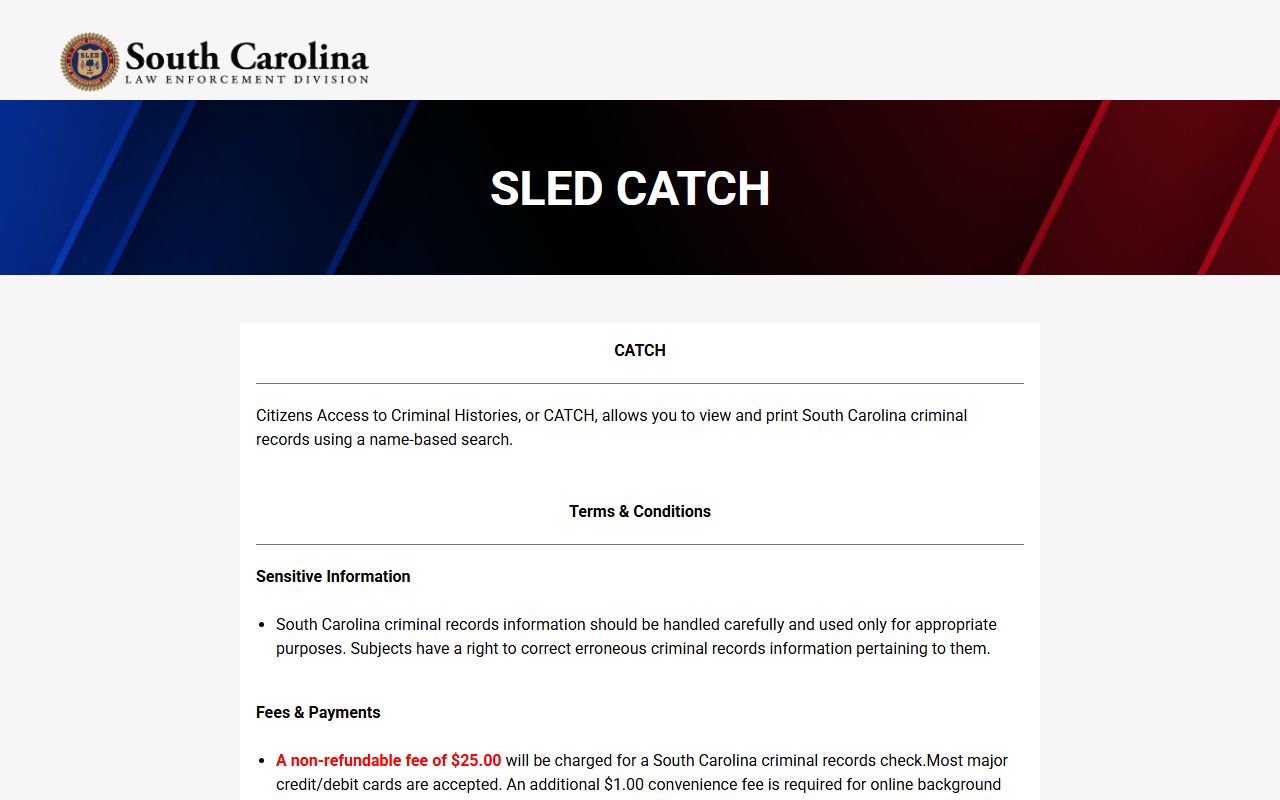
A SLED CATCH search costs $25. An extra $1 convenience fee applies for online searches. Most major credit and debit cards are accepted. You can also mail requests to SLED Records Department, PO Box 21398, Columbia SC 29221-1398. Mail requests have no convenience fee. Accepted payment is business check, certified check, cashier's check, or money order. Charitable groups that meet state requirements pay just $8. School district checks for teachers and substitutes are free. For questions about results, call the SLED Public Dissemination Unit at 803-896-1443 between 9am and 4:30pm on weekdays.
Each county also keeps its own booking reports. The sheriff's office in each county runs the local detention center. These facilities log every booking with arrest and charge data. Many counties offer online inmate search tools. Others require a call or in-person visit.
The South Carolina Department of Corrections inmate search covers inmates in state prisons.
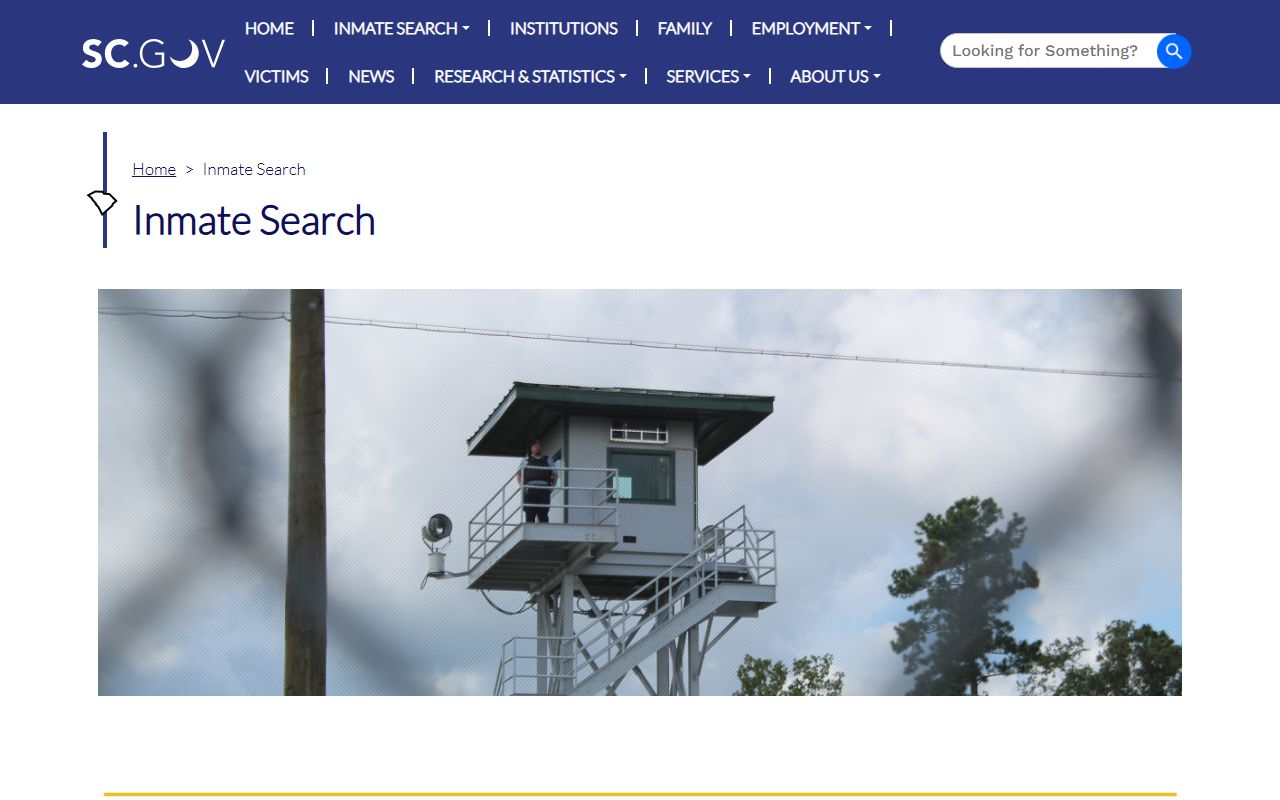
The SCDC search shows people currently sentenced to state prisons. It does not cover county jail inmates or people on parole or probation. Data updates as of midnight the day before. SCDC also runs a toll-free inmate information line at 1-866-727-2846. Under S.C. Code Ann. § 30-4-30, the public has the right to inspect records including booking reports in South Carolina. Errors in SCDC data can be reported to Ombudsman@doc.sc.gov.
How to Search Booking Reports in South Carolina
Several online tools make it simple to search booking reports in South Carolina. The right tool depends on where the person is held. Start with the county where the arrest took place. Most counties have a sheriff's office website with some form of inmate lookup. Large counties like Greenville, Charleston, Horry, and York run full online booking databases. Greenville County offers a 24-hour inmate search. Horry County posts bookings and releases on its government website. Smaller counties may lack online tools. Call the detention center in those cases.
The SCDC Public Inmate Search shows current state prison inmates in South Carolina.
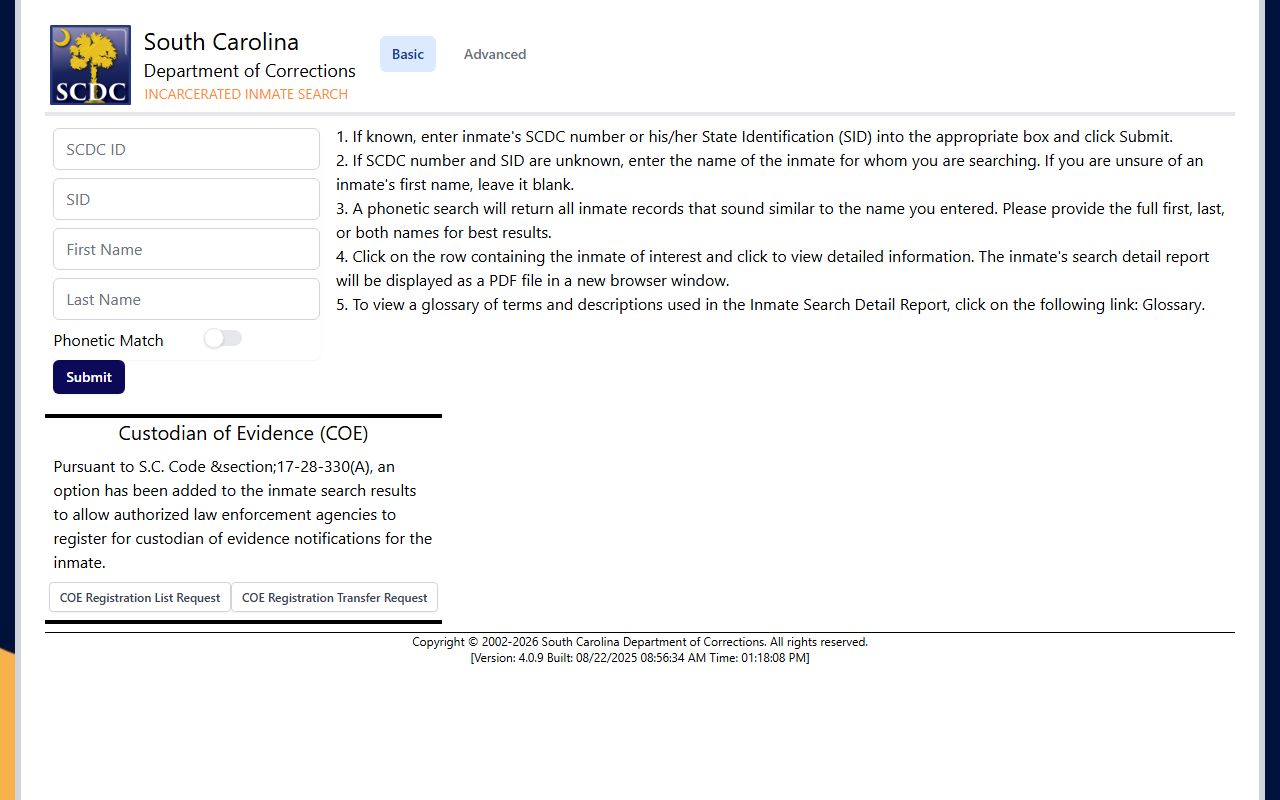
For state prison inmates, the SCDC public search is the best tool. It displays photos and public data on people currently in state custody. The system does not show juvenile offenders housed with the agency, per S.C. Code Ann. Sections 20-7-8505 and 20-7-8515. Current fugitives from SCDC are also left out. For released inmates, the SCDC Released Inmate Search lets you search by release date and county. This helps track people who have served their time and left state custody.
SLED serves as the central law enforcement agency in South Carolina and maintains the statewide criminal history database.
Court records add more detail. The South Carolina Judicial Department runs the Public Index. You can search by name or case number. This shows charges, hearing dates, and outcomes. General Sessions Court handles felonies. Magistrate and municipal courts handle misdemeanors. Not all records are online. Some require a visit to the Clerk of Court office. Case files include dispositions that do not appear in booking reports alone.
Note: County inmate search tools only show people currently held or recently released from that specific facility in South Carolina.
South Carolina Arrest Records and Public Access
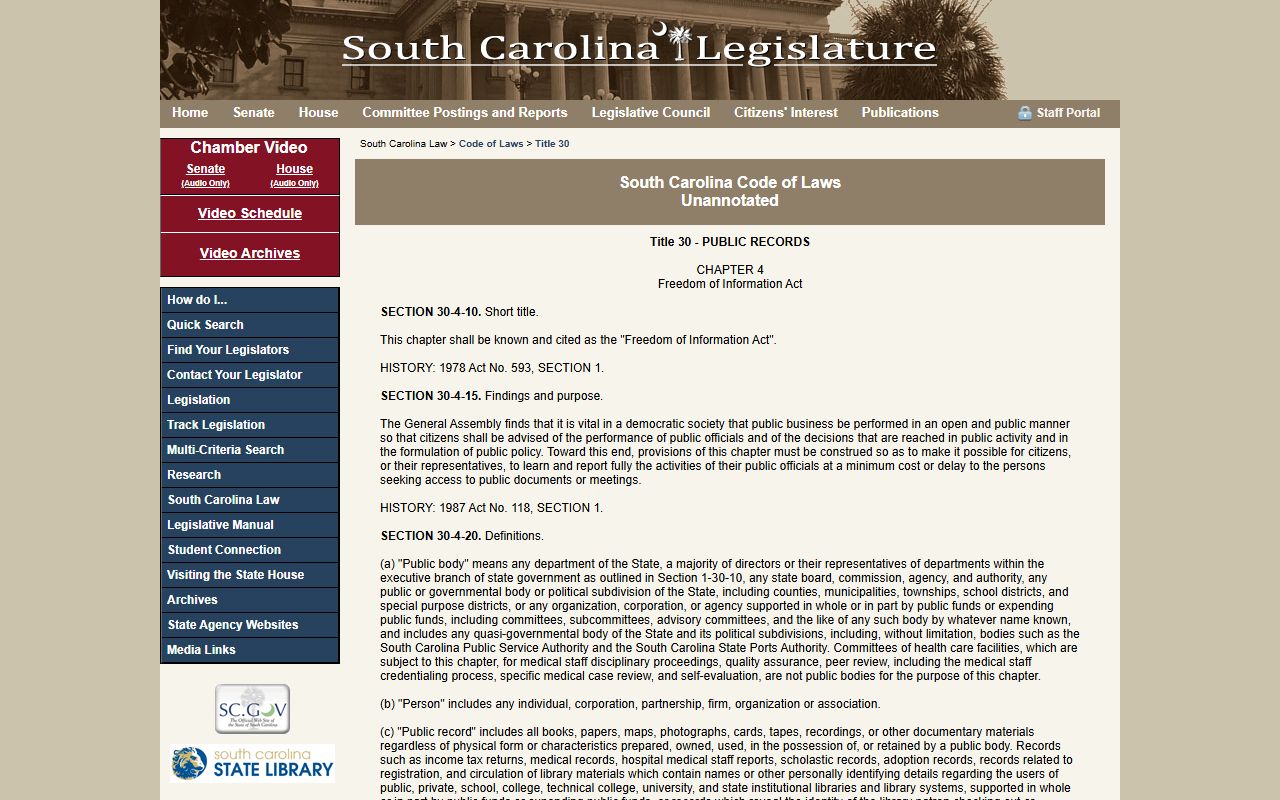
Booking reports in South Carolina are public records. The Freedom of Information Act (S.C. Code Ann. § 30-4-10) gives the public the right to inspect government records. This includes arrest reports and booking data held by law enforcement agencies across South Carolina. Under S.C. Code Ann. § 30-4-50, reports that disclose the nature, substance, and location of any crime are specifically public information. Law enforcement must make the last 14 days of reports available for walk-in viewing. Detention centers must provide the last three months of jail records for public inspection. No written request is needed for these in-person lookups. The time window does not mean older records are private. It simply sets a minimum for what must be on hand at all times.
The South Carolina FOIA statute establishes public access rights for booking reports and other law enforcement records.
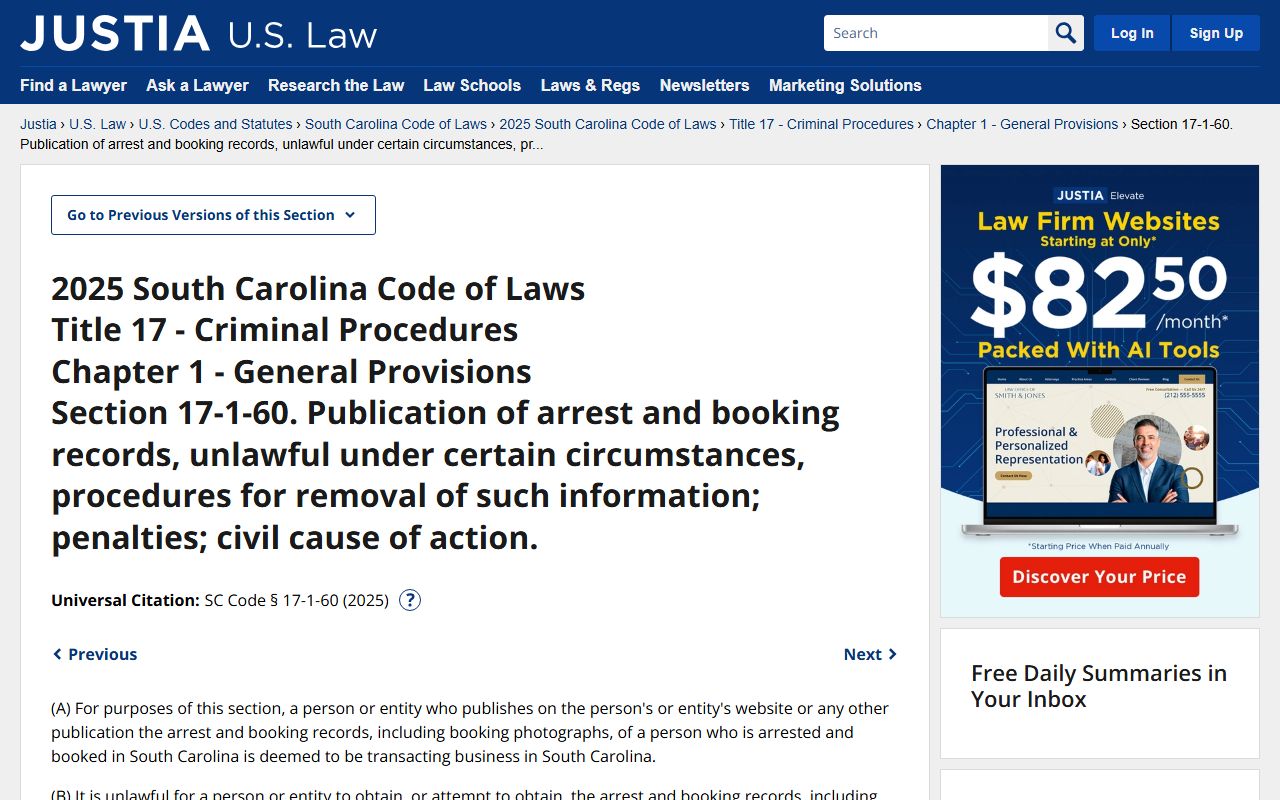
Some records have restrictions. Ongoing investigations may be withheld. Juvenile records are sealed. Expunged records are not available. Under S.C. Code Ann. § 17-1-40, when charges are dismissed or a person is found not guilty, booking records, mug shots, and fingerprints must be destroyed. Social Security numbers, medical peer review documents, and student records are also exempt from release.
The South Carolina arrest records publication statute defines rules for public access to booking data.
The FOIA Handbook from the South Carolina Association of Counties gives detailed guidance on records requests. The Attorney General's FOIA Guide covers exemptions that may apply to certain booking records. Written requests should include your name, contact info, and a clear description of the records you want. Agencies must respond within 10 business days. Copy fees run $0.10 to $0.25 per page. If a request is denied, you can appeal to the agency head within 30 days or file a lawsuit in circuit court.
What South Carolina Booking Reports Include
Booking reports in South Carolina follow a standard format across all 46 counties. Each report is created when a person is arrested and processed at a detention center. The data comes from the arresting officer and facility staff. All booking reports must go to SLED on a regular basis. The minimum is once per week. Reports from any agency during a given month must reach SLED no later than the fifth day of the next month. Arrest documents must be of a standard type approved by SLED. These documents are commonly called booking reports.
The South Carolina Judicial Department keeps court records that connect to booking report data.
A South Carolina booking report typically includes the following details:
- Full name, date of birth, and physical description
- Date, time, and location of the arrest
- Charges filed with statutory citations
- Arresting officer and agency name
- Bond type, amount, and conditions
- Booking photo and fingerprint classification
- Court dates and case numbers
Reports may also show custody status, housing unit, and release data. Each person gets a unique booking number. SLED processes, analyzes, and compiles all booking reports it receives. The agency classifies and counts them using procedures defined by the International Association of Chiefs of Police and the FBI.
South Carolina Inmate and Offender Search
Beyond booking reports, South Carolina provides other tools to look up people in the criminal justice system. Each tool covers a different part of the system. Use them together to get a more complete picture of someone's status in South Carolina.
The South Carolina Sex Offender Registry is free to search and separate from the SLED CATCH system.
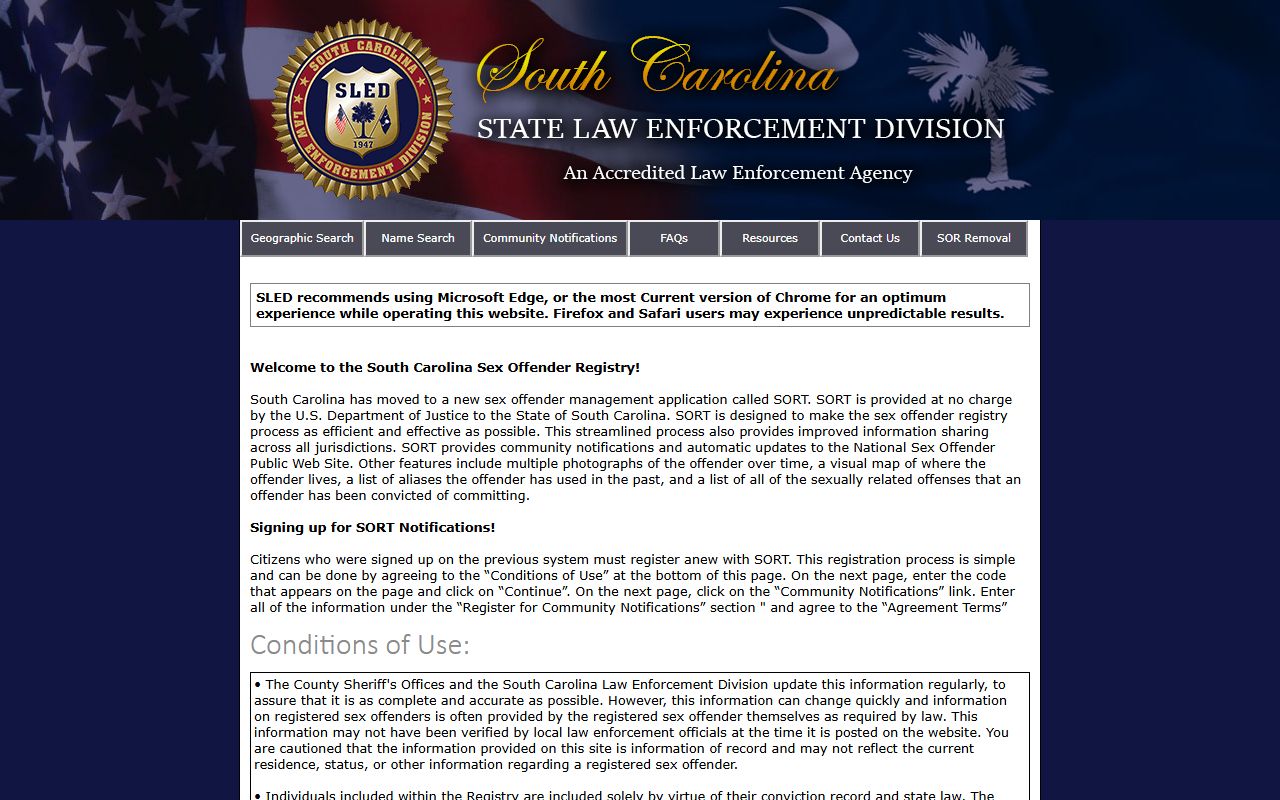
The sex offender registry is run by SLED. It includes anyone in South Carolina convicted of a sex offense in any state. The registry has mapping tools to find offenders by address. Registration periods vary based on offense type and risk level. This search is free. SLED CATCH does not check the sex offender registry. Search both tools when you want a full picture of someone's criminal history in South Carolina.
VINE gives free custody status alerts for victims and the public in South Carolina.
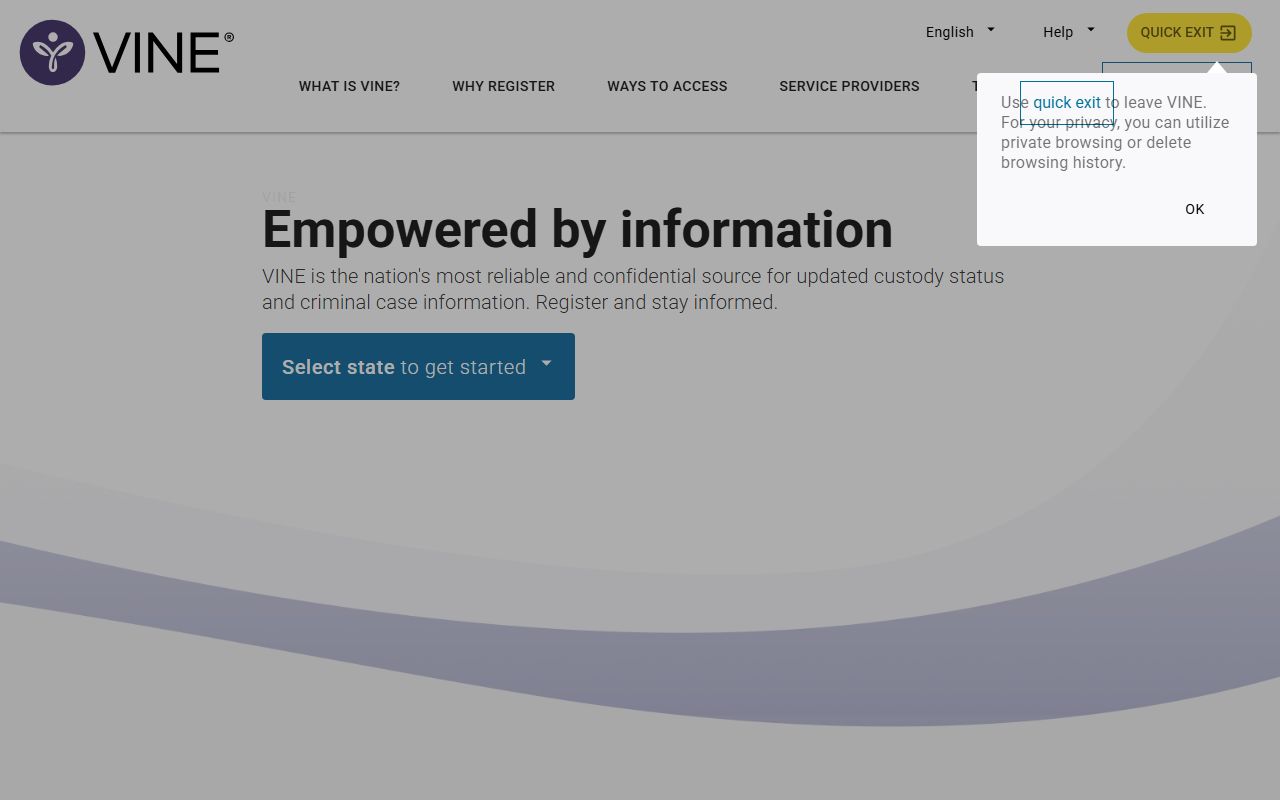
VINE stands for Victim Information and Notification Everyday. It is free and confidential. You can get alerts by phone, email, text, or TTY when an offender's custody status changes. The system covers county jail inmates, state prisoners, and people on probation or parole. It runs 24 hours a day, seven days a week. Users can search for offenders and sign up for automatic updates on status changes.
The Department of Probation, Parole and Pardon Services tracks offenders under community supervision in South Carolina.
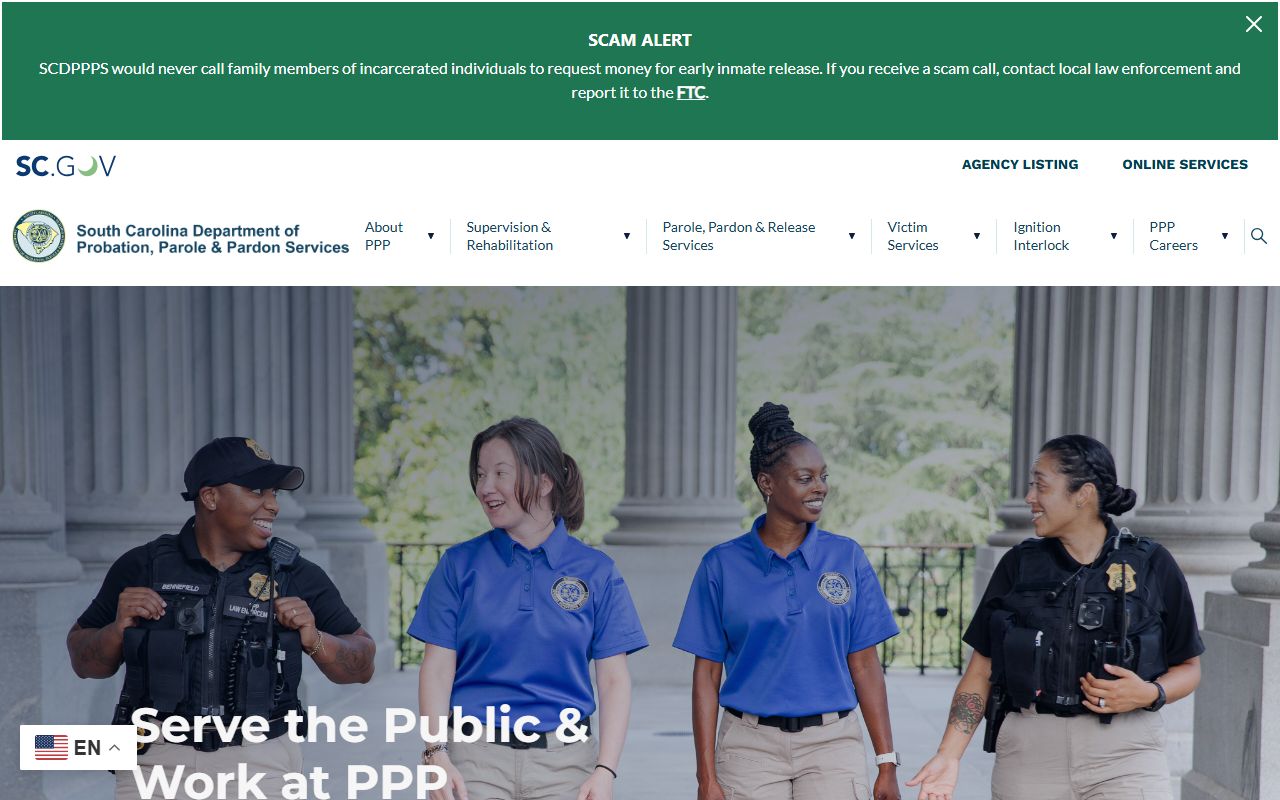
This department covers people not in jail or prison. Their offender search shows those on probation, parole, or other supervision. It also handles pardon applications and clemency requests. Historical records of completed supervision may be available through formal requests. Recent FOIA updates added dashcam video to public records and removed jail time as a penalty for FOIA violations in South Carolina. A civil fine of up to $500 may apply if a court finds a violation was arbitrary or capricious.
Note: SLED CATCH does not check the sex offender registry, so search both systems when looking up criminal history in South Carolina.
Browse South Carolina Booking Reports by County
Each county in South Carolina has a sheriff's office and detention center that maintains booking reports. Pick a county below to find local resources and contact information for booking records in that area.
Booking Reports in Major South Carolina Cities
Residents of major cities are booked at their county detention center. Pick a city below to find booking report resources for that area in South Carolina.